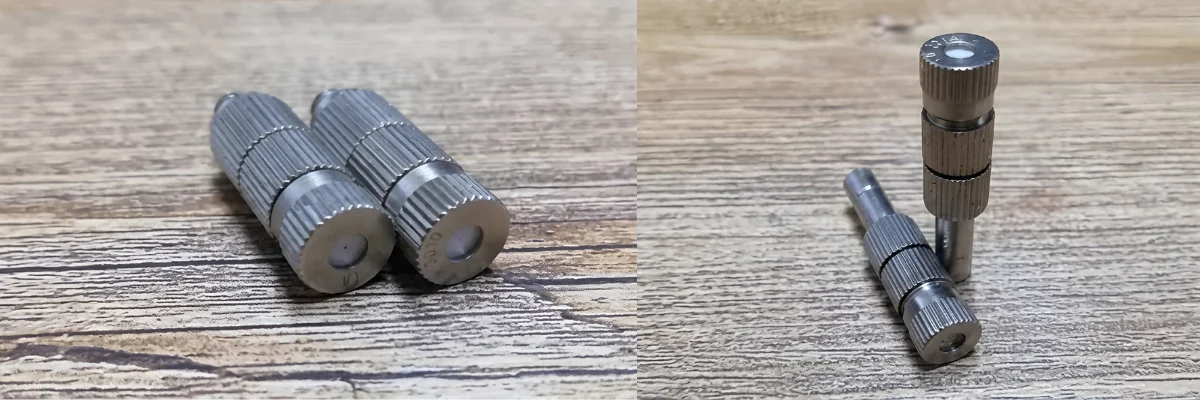
Spray nozzles are used in many industrial applications such as washing, cleaning, dust suppression, cooling, misting, humidification, chemical spraying, tank cleaning, and process spraying. One of the most important points in nozzle selection is operating pressure.
Many users ask whether they should choose a low pressure spray nozzle or a high pressure spray nozzle. The answer depends on the application, required spray impact, droplet size, flow rate, water quality, pump capacity, and coverage area.
As a spray nozzle manufacturer, we help industries select suitable spray nozzles based on real application needs, not only based on pressure rating. This blog explains the key differences between low pressure and high pressure spray nozzles, their uses, benefits, and selection points.
What are low pressure spray nozzles?
Low pressure spray nozzles are nozzles that work effectively at lower operating pressure. They are commonly used where the application needs general spraying, wetting, rinsing, cooling, low-pressure misting, or liquid distribution without very high impact.
Low pressure systems are usually simpler and may require lower pump power compared to high pressure systems.
Common applications of low pressure spray nozzles
Low pressure nozzles are used in:
- General water spraying
- Light washing and rinsing
- Material wetting
- Low-pressure dust suppression
- Cooling applications
- Chemical spraying
- Agriculture spraying
- Foam control
- Process liquid distribution
- Low-pressure misting systems
Benefits of low pressure spray nozzles
- Simple system design
- Lower pump power requirement
- Suitable for general spraying
- Easy maintenance
- Lower operating cost in many applications
- Useful for medium and large droplet spraying
- Suitable where high impact is not required
What are high pressure spray nozzles?
High pressure spray nozzles are designed to work at higher operating pressure. They are used when strong spray impact, fine atomization, high cleaning force, or fine mist generation is required.
High pressure systems usually need a suitable high-pressure pump, strong fittings, proper hose selection, safety accessories, and correct nozzle material.
Common applications of high pressure spray nozzles
High pressure nozzles are used in:
- High-pressure cleaning
- Industrial washing
- Surface cleaning
- Descaling support
- Fine misting
- Evaporative cooling
- Dust suppression with fine droplets
- Tank cleaning
- Vehicle washing
- Parts cleaning
- Process atomization
Benefits of high pressure spray nozzles
- Higher cleaning impact
- Better atomization
- Produces finer droplets in misting applications
- Suitable for compact spray systems
- Helps improve cleaning efficiency
- Useful where strong force is required
- Can reduce water use in some targeted applications
Low pressure vs high pressure spray nozzles: Main difference
The main difference between low pressure and high pressure spray nozzles is the spray force, droplet size, system design, and application purpose.
| Point | Low Pressure Spray Nozzle | High Pressure Spray Nozzle |
|---|---|---|
| Operating Pressure | Lower pressure range | Higher pressure range |
| Spray Impact | Low to medium | Medium to high |
| Droplet Size | Medium to large droplets | Fine to medium droplets depending on nozzle |
| Pump Requirement | Lower pump pressure | High-pressure pump required |
| System Cost | Usually lower | Usually higher |
| Maintenance | Easier | Requires more care |
| Best For | Wetting, rinsing, general spraying | Cleaning, fine misting, atomization |
| Water Use | Depends on flow and nozzle size | Can be controlled with correct nozzle |
| Safety Requirement | Basic | Higher safety requirement |
How pressure affects spray nozzle performance
Pressure affects how the liquid comes out of the nozzle. It can change the spray impact, droplet size, spray pattern, and flow rate.
Higher pressure can
- Increase spray impact
- Improve atomization
- Produce finer droplets
- Improve cleaning force
- Increase flow rate depending on nozzle design
- Improve misting performance
Lower pressure can
- Produce softer spray
- Create larger droplets
- Reduce spray impact
- Work better for gentle wetting
- Reduce pump power requirement
- Suit general spraying applications
Pressure alone does not decide performance. The nozzle type, orifice size, spray angle, flow rate, and installation distance must also be checked.
When should you choose low pressure spray nozzles?
You should choose low pressure spray nozzles when the application needs simple spraying, wetting, rinsing, or liquid distribution without strong impact.
Choose low pressure nozzles if
- You need general water spraying
- High cleaning force is not required
- You want lower pump power
- The application needs material wetting
- The system uses low-pressure water supply
- You need simple maintenance
- You are spraying chemicals at controlled flow
- You need larger droplets to reduce drift
- The spray area is not very demanding
When should you choose high pressure spray nozzles?
You should choose high pressure spray nozzles when the application needs stronger impact, better cleaning force, fine atomization, or fine mist generation.
Choose high pressure nozzles if
- You need high-impact cleaning
- Dirt, oil, scale, or deposits must be removed
- Fine mist is required
- Droplet size must be smaller
- You need better atomization
- The system is used for high-pressure washing
- You need evaporative cooling
- You want targeted spray with better force
- The pump and pipeline are suitable for high pressure
Example
For industrial parts washing or high-pressure surface cleaning, high pressure flat fan nozzles or solid stream nozzles may be preferred because they provide stronger cleaning impact.
Pressure and droplet size
Pressure also affects droplet size.
General understanding
| Pressure Level | Droplet Size | Common Use |
|---|---|---|
| Low Pressure | Medium to large droplets | Wetting, rinsing, general spraying |
| Medium Pressure | Medium droplets | Washing, dust control, cooling |
| High Pressure | Fine to medium droplets | Misting, atomization, high-impact cleaning |
Higher pressure often helps create finer droplets, but final droplet size also depends on nozzle design and orifice size.