
Spray Nozzle for Dust Control
Dust control spray nozzles help suppress airborne dust in industrial operations by delivering water in a controlled spray pattern for efficient, targeted dust reduction.
What Is a Dust Control Spray Nozzle?
A dust control spray nozzle is an engineered nozzle used in industrial dust suppression systems to manage airborne particles at dust-generating points. These nozzles help control dust by delivering water in the required droplet size and spray pattern for the application.
Unlike ordinary spray fittings, industrial dust suppression nozzles are selected based on performance requirements such as coverage area, pressure availability, droplet formation, and durability in harsh operating conditions.
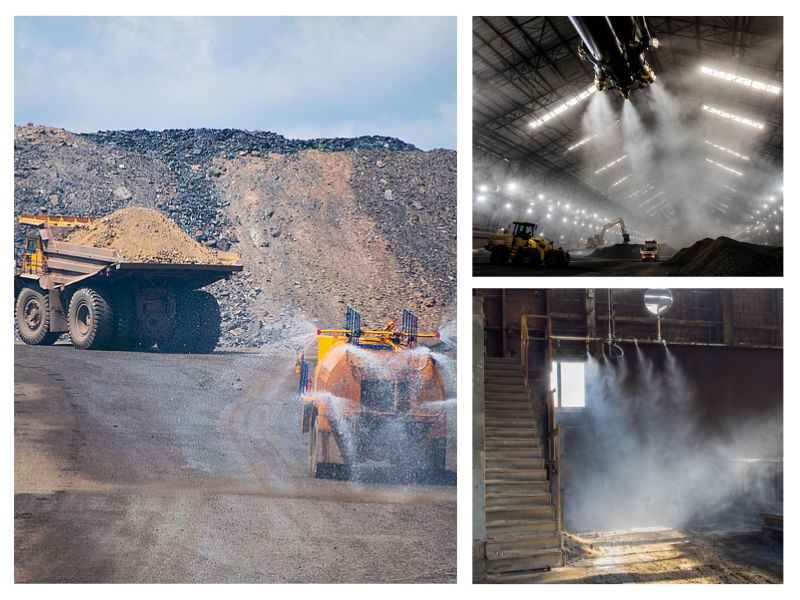
Why Nozzle Selection Important in Dust Suppression
Choosing the correct nozzle is important for dust suppression because nozzle performance depends on key specifications such as spray pattern, orifice size, droplet size, spray angle, operating pressure, and flow rate. These parameters decide how effectively the water reaches the dust source, how well the droplets interact with airborne particles, and how much moisture is added to the material.
The correct nozzle helps:
Reduce airborne dust at the source
Improve visibility in work zones
Support cleaner plant conditions
Control water usage
Improve dust suppression performance in continuous operation
Types of Nozzles Used in Dust Suppression Systems
Different dust suppression applications require different nozzle types. The best nozzle depends on the dust characteristics, pressure, spray angle, and installation area.
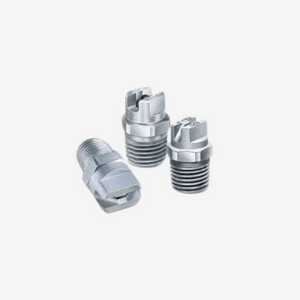
Flat Spray Nozzle
Flat spray nozzles are designed with a flat fan spray pattern, typically having an orifice size of 0.30 mm to 2.00 mm, droplet size of 80 to 300 microns, and a spray angle of 15° to 110° for directional coverage. They generally operate at 1.5 to 10 bar with a flow rate of 0.20 to 15 LPM, making them suitable for conveyor lines, belt wetting, and edge-area dust suppression.
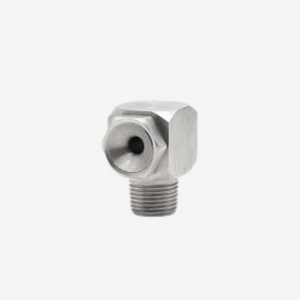
Hollow Cone Nozzle
Hollow cone nozzles produce a hollow cone spray pattern with an orifice size of 0.30 mm to 2.00 mm, generating droplet sizes of 50 to 250 microns and a spray angle of 40° to 120° for circular spray distribution. They generally operate at 2 to 10 bar with a flow rate of 0.20 to 12 LPM, making them suitable for chutes, transfer points, and localized dust suppression zones.
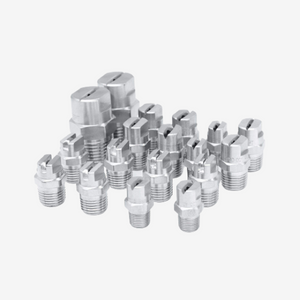
Mist Nozzle
Mist nozzles are designed for a fine mist spray pattern, typically using an orifice size of 0.15 mm to 0.30 mm to generate droplet sizes of 20 to 50 microns with a spray angle of 60° to 90°. They commonly operate at 15 to 70 bar with a flow rate of 0.03 to 0.15 LPM, making them suitable for enclosed areas, transfer points, and fine airborne dust suppression.
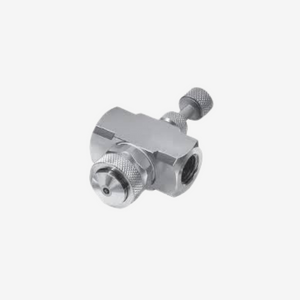
Air Atomizing Nozzle
Air atomizing nozzles create a fine atomized spray pattern using liquid and compressed air, typically with an orifice size of 0.20 mm to 1.00 mm, droplet size of 10 to 50 microns, and a spray angle of 20° to 90° depending on design. These nozzles normally operate with air pressure of 1.5 to 6 bar, liquid pressure of 0.5 to 3 bar, and a low liquid flow rate of 0.05 to 2.00 LPM, making them suitable for very fine dust suppression where controlled atomization is required.

Ultra Sonic Nozzle
Ultra sonic nozzles are designed to generate an ultra-fine mist spray pattern through high-frequency vibration, typically producing droplet sizes of 5 to 20 microns with an application-based spray angle and very fine atomization performance. These nozzles usually operate at low liquid pressure or gravity feed conditions with a very low flow rate, and are suitable for specialized dust suppression applications where extremely fine droplets and minimal moisture addition are required.
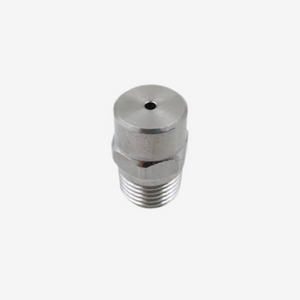
Full Cone Nozzle
Full cone nozzles provide a full cone spray pattern with an orifice size of 0.50 mm to 2.50 mm, producing droplet sizes of 100 to 400 microns and a spray angle of 15° to 120° for dense area coverage. These nozzles usually operate at 1 to 10 bar with a flow rate of 0.50 to 20 LPM, making them suitable for crushers, screens, and direct wetting dust control points.
Applications of Dust Control Spray Nozzles
Foundries and loading points
Ash handling systems
Bulk storage facilities
Coal handling systems
Conveyor transfer points
Demolition and construction areas
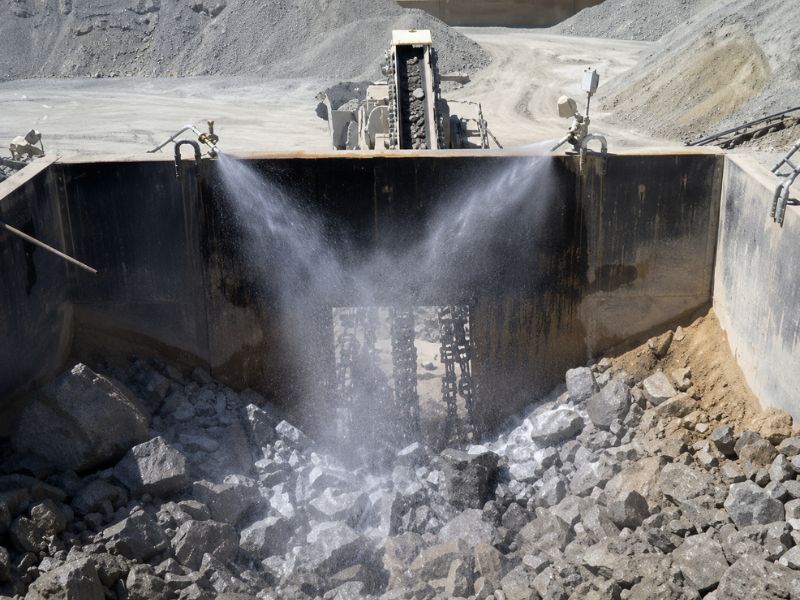
Mining and quarry operations
Crusher plants and screening units
Cement and clinker handling
Steel and metal processing units
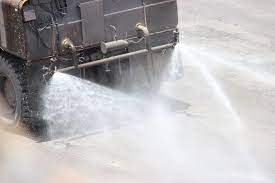
Ports, stockyards, and open industrial yards
Benefits of Choosing the Right Dust Suppression Nozzle
A properly selected dust suppression nozzle offers several benefits:
Deliver the correct droplet size for better dust interaction
Improve spray targeting at specific dust control points
Provide the required spray angle for proper area coverage
Support efficient water distribution without excess wastage
Reduce over-wetting of material by matching spray output to the application
Improve suppression efficiency in crushers, transfer points, loading zones, and stockyards
Match open-area, enclosed-area, and point-source dust control requirements
Support better clog resistance and durability in demanding environments
How to Select the Right Dust Control Nozzle
Dust particle size

Water quality
Material moisture tolerance
Flow rate
Operating pressure
Required spray angle
Nozzle material and wear resistance
Open areas may require wider spray coverage, while enclosed zones with fine airborne dust often require smaller droplets. In abrasive industries, nozzle durability and clog resistance are also important.
Why Choose Us For Spray Nozzle Solution?
As a trusted dust control nozzle supplier in India, we provide nozzle solutions designed for practical industrial conditions. Our focus is on providing the right nozzle for your application needs along with expert guidance to help you choose the best solution.
High-quality spray nozzles designed for reliable industrial performance
Bulk order support available across India
Manufactured using durable materials such as brass, stainless steel, and wear-resistant options
Quality-focused production standards for consistent nozzle performance and long service life
Trusted support for both standard and customized spray nozzle solutions
Timely delivery support to meet urgent and scheduled project requirements
Reliable supply capability for repeat orders and long-term industrial demand
Application-based guidance to help select the right nozzle for specific operating conditions
Customization available for spray pattern, flow rate, pressure range, connection size, and application need
FAQ - Industrial Dust Suppression Nozzle
What is the purpose of a dust control spray nozzle?
A dust control spray nozzle is used to reduce airborne dust or prevent dust from becoming airborne by applying water in a controlled spray pattern at dust-generating points.
Which nozzle is suitable for crusher dust control?
The ideal nozzle depends on pressure, dust load, and installation location. In most cases, durable nozzles with the correct spray pattern and clog resistance are preferred for crusher applications.
Are mist nozzles good for dust suppression?
Yes, mist nozzles are useful where finer droplets are needed to improve interaction with suspended dust particles while keeping water usage controlled.
What is the difference between fog dust control nozzles and full cone dust control nozzles?
Fog nozzles generally produce finer droplets for airborne dust suppression, while full cone nozzles provide denser spray coverage and direct wetting.
Can dust suppression nozzles be used in mining and bulk material handling?
Yes, dust suppression nozzles are widely used in mining, crushers, conveyors, stockyards, cement plants, and other bulk handling industries.
How does nozzle flow capacity affect dust control?
Flow capacity determines how much water the nozzle delivers, affecting spray coverage, droplet formation, and suppression efficiency.
What is the advantage of wide-angle spray nozzles?
Wide-angle spray nozzles provide larger coverage areas, making them suitable for stockyards, conveyors, and open-area dust suppression.
What nozzle is used for fine dust particles?
Mist nozzles, fog nozzles, and air atomizing nozzles are commonly used for fine airborne dust particles because they generate smaller droplets.
Can fog nozzles control airborne dust?
Yes, fog nozzles are specifically designed to suppress airborne dust by producing ultra-fine droplets that interact with suspended dust particles.
What type of nozzle is used in cement plants for dust control?
Cement plants commonly use full cone nozzles, mist nozzles, and flat fan nozzles for clinker handling, crushers, transfer points, and conveyor systems.