Description
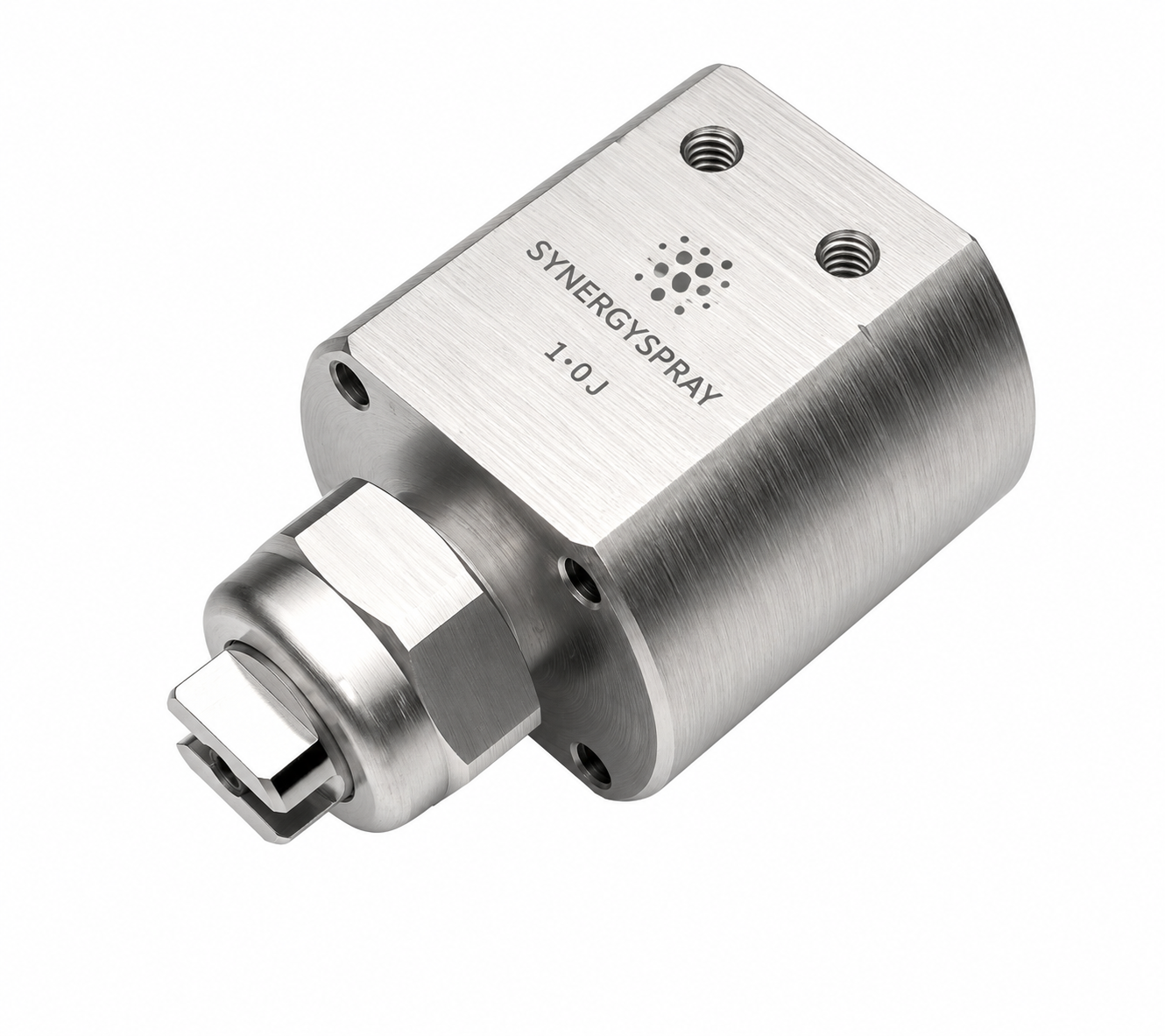
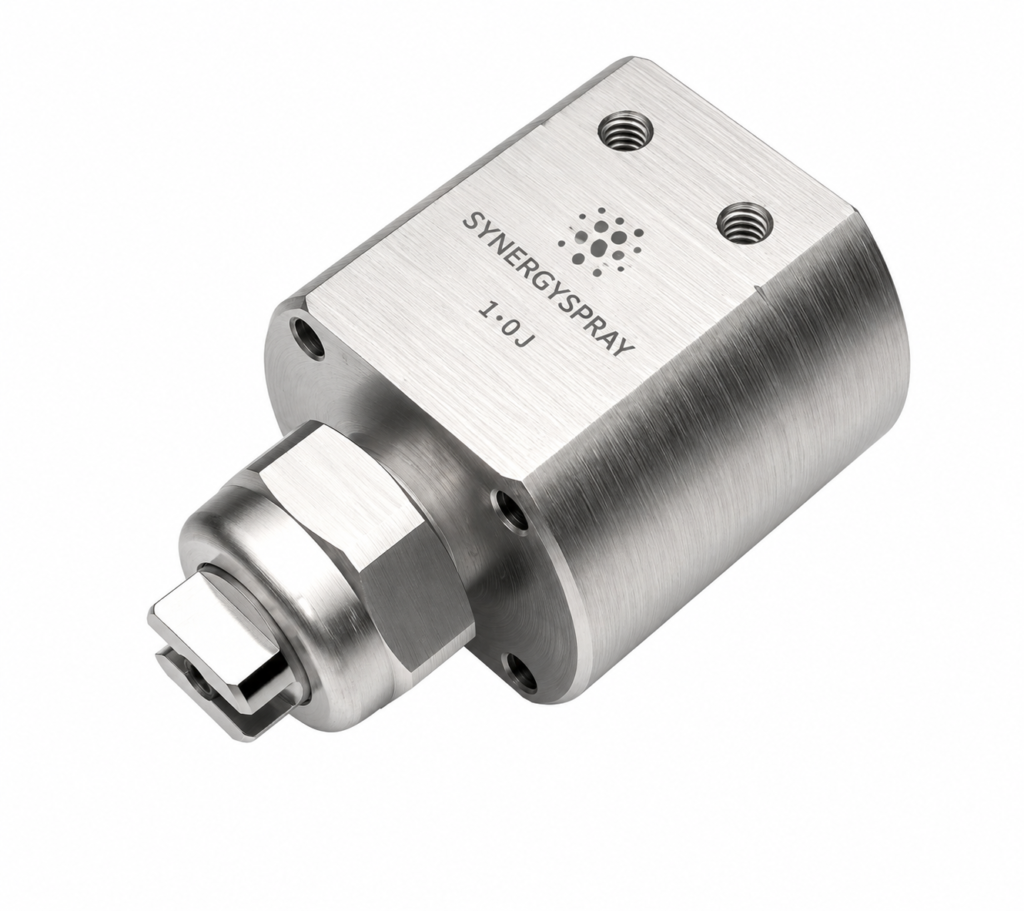
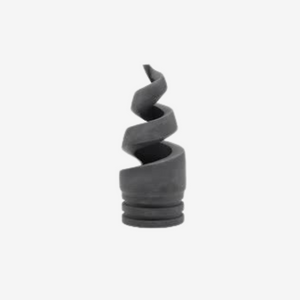
The DCF-S nozzle is a single fluid electro hydraulic spray nozzle engineered for controlled and repeatable liquid spraying in industrial environments. It operates through an internal electromagnetic solenoid mechanism that opens and closes the fluid path with high speed and accuracy.
When the solenoid coil is energized, magnetic force lifts the valve core and allows liquid to flow through the nozzle. When power is switched off, the spring mechanism closes the valve instantly, helping prevent dripping and reducing material waste.
This nozzle can be easily integrated with PLC systems, timers, sensors, or spray controllers to synchronize spraying with production line speed. It is ideal for applications where accurate fluid distribution, clean shut-off, and consistent spray output are required.
Applications
The DCF-S Single Fluid Electro Hydraulic Nozzle is suitable for:
- Industrial spraying systems
- Belt coating operations
- Cooling and thermal regulation
- Adhesive and gluing applications
- Machinery lubrication systems
- Spray marking and identification
- Moisturizing and humidity control
- High-speed automated production lines
FAQ
1. Does this Electro Hydraulic Spray Nozzle require compressed air?
No, this Electro Hydraulic Spray Nozzle does not require compressed air. It is a single fluid spray nozzle, which means it uses liquid pressure rather than air-assisted atomization.
2. What is the difference between a Single Fluid Spray Nozzle and a two-fluid nozzle?
A Single Fluid Spray Nozzle uses only pressurized liquid, while a two-fluid nozzle uses both liquid and compressed air. Industry references commonly describe two-fluid nozzles as systems that mix air and liquid to create different spray effects.
3. Why is this also called a Solenoid Operated Spray Nozzle?
It is called a Solenoid Operated Spray Nozzle because the spray ON/OFF function is controlled by an electric solenoid. This allows faster and more accurate spray timing compared with manual control.
4. What is the main advantage of an Automatic Spray Nozzle?
The main advantage of an Automatic Spray Nozzle is that it can control spray timing without manual operation. This helps improve consistency, reduce unnecessary liquid use, and support repeatable spray cycles.
5. Can this 24V DC Spray Nozzle be used with control systems?
Yes, a 24V DC Spray Nozzle like the DCF-S can be connected with suitable control systems for automatic spray activation. Solenoid nozzle FAQs commonly mention 24V DC normally closed designs as common options for automation systems.
6. Does this Precision Spray Nozzle help reduce dripping?
Yes, this Precision Spray Nozzle is designed for clean shut-off, which helps reduce dripping after the spray cycle ends. Good nozzle sealing is important because poor sealing can cause dribbling and inconsistent output.
7. How do I choose the right Industrial Spray Nozzle?
To choose the right Industrial Spray Nozzle, check the liquid type, pressure, flow requirement, spray effect, connection size, and material compatibility. Open-source nozzle selection guides commonly recommend reviewing pressure, fluid, temperature, thread, material, and spray effect before buying.
8. Why is pressure important for an Electro Hydraulic Nozzle?
Pressure is important for an Electro Hydraulic Nozzle because it affects flow rate, spray formation, and droplet size. In general nozzle guidance, higher fluid pressure can reduce droplet size and may influence spray angle depending on nozzle design.
9. Is a No Compressed Air Spray Nozzle easier to operate?
A No Compressed Air Spray Nozzle can simplify the spraying setup because it does not need an air line or air compressor for operation. This can make the system cleaner and easier to control where only liquid pressure and electrical activation are required.